Anders Monsen

Lost worlds and ports of call

K. W. Jeter’s Infernal Devices

One of a handful of paperback books that I store in a plastic wrapper is K. W. Jeter’s Signet edition of Infernal Devices.

This book, published in November, 1987 is inscribed to me by Jeter, whom I met back in 1989 or 1990 at a science fiction convention in Austin, Texas called Armadillocon (I’m guessing it was 1990, since my inscribed copy of Farewell Horizontal was published in 1989, and I probably got them both signed at the same time). Subtitled “A mad Victorian fantasy,” this book was one of the pioneering Steampunk novels in the 1980s and 1990s, along with Jeter’s own Morlock Night, and several books by James P. Blaylock (another of my favorite writers, but not necessarily for the Steampunk angle).

After I read Infernal Devices, I went on to buy many more books by Jeter, both in paperback and hardcover, whenever I could find them. I don’t have all of his books, especially some of the earlier paperbacks (Mantis, The Dreamfields, Soul Eater, Dark Seeker—all are out there somewhere). Jeter wrote across many genres, though mainly SF and horror; In the Land of the Dead, Mantis, and The Night Man fall into the horror genre (Recently, I was lucky enough to get a hardcover copy of the Morrigan’s edition of In the Land of the Dead). He also has written fantasy books, such as Morlock Night, and the trilogy that started with Infernal Devices. Every time I’m in a bookstore, I check the “J” section for anything by Jeter. The man’s just a great writer. I’d say that I rarely have any luck, but this past weekend (as I was waiting for the hardcover edition of Infernal Devices to arrive, I found a copy of Noir, almost as if the planets had aligned at that moment. Two or three years ago I found a near-fine copy of Seeklight, Jeter’s first novel, but that’s about it these days.

I was aware, of courses, that a hardcover edition of Infernal Devices existed. In all the years since it was published, and since I bought the paperback edition, I never came across a physical copy in any bookstores or at any of the science fiction conventions which I attended in the 1990s and early 2000s. By pure chance, however, I stumbled across a copy online recently, and knew I had to have it. In what condition would it arrive, was the question… Thankfully, it looked almost new, and fit right in with my other Jeter books.

Jeter since followed up with two sequels in the world of Infernal Devices: Fiendish Schemes (2013) and Grim Expectations (2017) — such brilliant titles! Tor Books published the hardcover and trade paperback edition of Fiendish Schemes. In 2017 Angry Robot published Grim Expectations as a paperback original. They also published the previous two books in a nice matching set of trade paperback books. It’s a long way from 1987 to 2013. While I devoured Infernal Devices fairly quickly, I’ve so far struggled to get into the sequels. I’m suer I’ve changed as much as Jeter, but now that I have the hardcover edition of Infernal Devices, maybe it’s time to try again.

Ray Garton’s Crucifax Autumn

I’m slowly narrowing in on one of my current goals: collecting all the books published by Dark Harvest, a small press active from 1983 to 1992. In that decade of activity Dark Harvest published over 50 books, from horror to science fiction to mysteries. My latest addition is Ray Garton’s Crucifax Autumn, a horror novel from 1998. With this book, only four remain on my list: a pair of Lawrence Block books, a horror anthology, and the first book ever published by Dark Harvest, back in 1983. Two of those four might prove to be impossible to find.

Ray Garton (1962-2024) was a noted horror writer. He was the author of over 60 books, the most notable being Live Girls. In an old interview he talks about the genesis of that novel, while walking through Times Square in the 1980s. On my first visit to the US back in 1987, I got lost on the New York Subway and exited long before my actual destination. I ended up walking south for countless blocks, also passing through Times Square. This was before the cleanup, before Times Square became a massive and relatively clean tourist attraction. My experience in Times Square in 1987 was similar to that of Garton’s: it was like walking through another planet, full of garish signs and pulsating neon, even in the middle of the day. Unlike Garton, that strange side of life didn’t interest me, and I’d never dove in that world to write a novel.

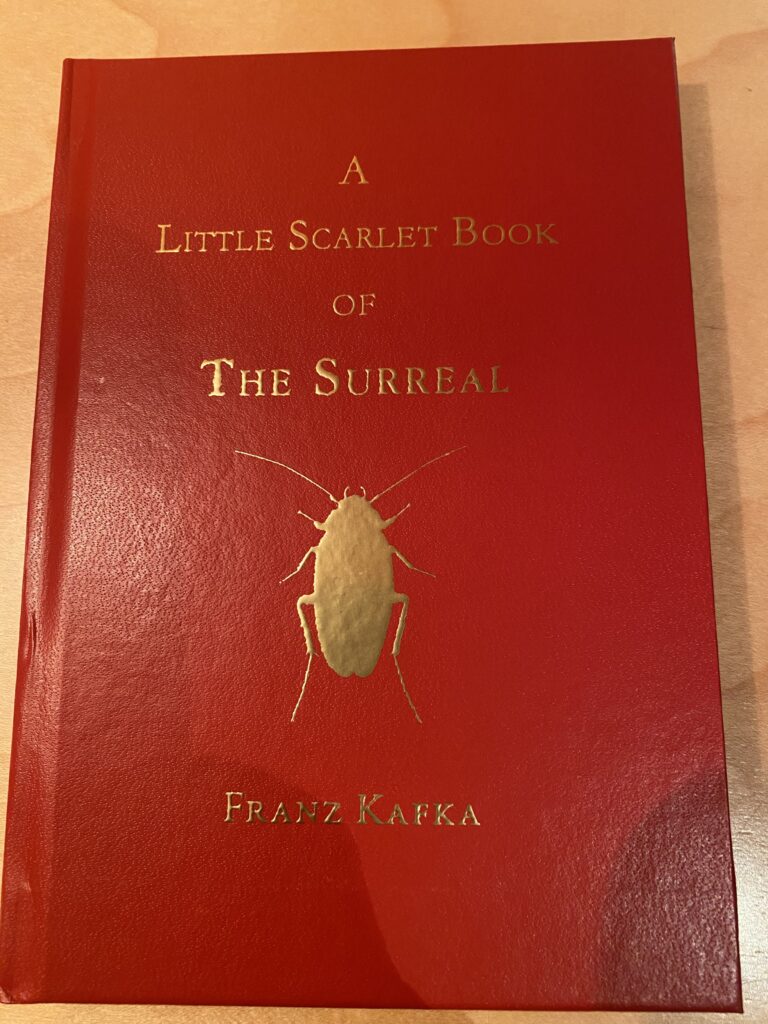
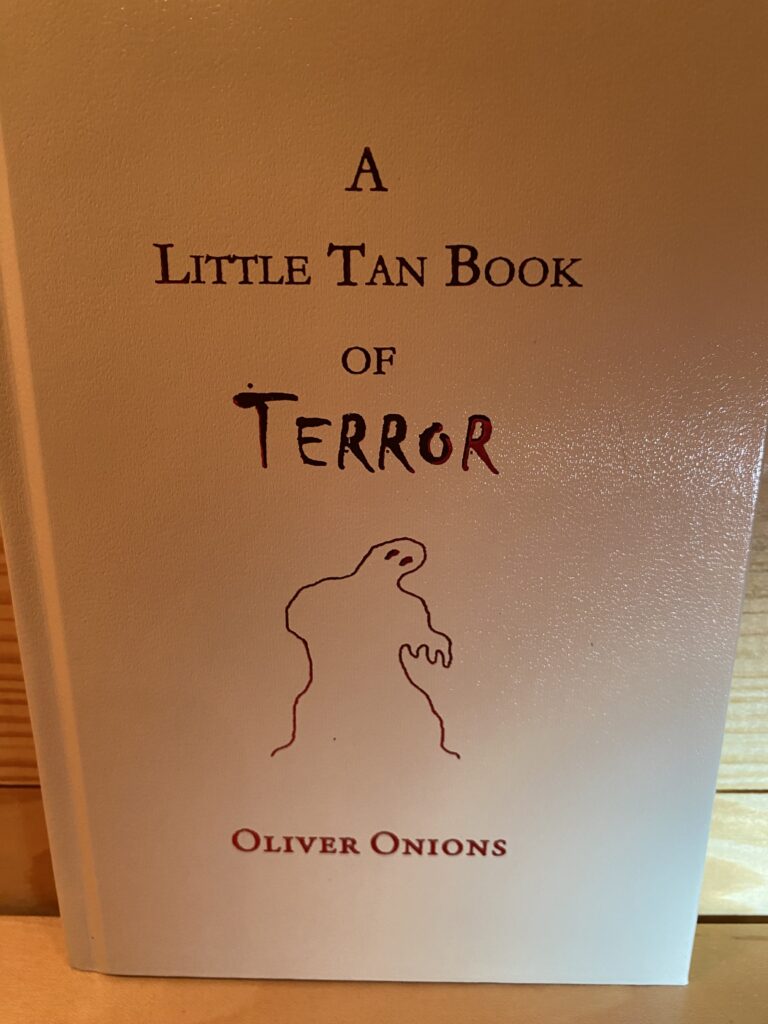
Garton was a published writer by age 22. He was awarded the 2006 World Horror Convention Grand Master Award, wrote short stories, novels, novelizations, and even ventured into the YA market. I’ve only read a trio of his books (Lot Lizards, Methods of Madness, plus his Borderlands Press collection, A Little Gray Book of Grim Tales), as I rarely read horror, but in my experience Garton’s a tough, no holds barred writer. As someone who saw himself as a person born to write, and kept at it until his death, Garton went far, far too soon at the age of 62.

Charles de Lint’s Spirits in the Wires

These days I rarely — if ever — come across a decent copy of any Charles de Lint books in a used book store. It was a shock, when this past weekend I came across a near-fine copy of Spirits in the Wires, in a hardcover edition for just $5.99. Until now I’ve seen just the occasional trade paperback edition of this title, and none in a decent condition. Any time that I come across a de Lint book that I don’t have, it’s a moment of celebration.

Published in 2003 — over 20 years ago now! — Spirits in the Wires touches upon the early moments of the Internet. How bizarre it is, for someone like myself who witnessed the birth of the internet, who delved into the World Wide Web back when it first was formed, to now look back and almost wish it never was invented. Yet, here we have almost 450 pages of a novel centered around the idea that some of the spirits of faery have moved to the aether of ones and zeros, bits and bytes.

Although I own a mix of paperback, hardcover, and specialty press books by Mr. de Lint, there’s still over 20 of his books that I lack. Recently, I’ve added a few of those missing books. Some of those additions remain unread. Isn’t that the best part about owning books, finding books that have yet to be discovered? Sometimes I think so. Having read close to 30 of de Lint’s books, I love the fact that there are still nearly two dozen that I haven’t read. I may never read them all, but I so envy anyone who reads his fiction for the first time. Treasure it, for there are few writers (if any) like him.

Charles de Lint’s Medicine Road

Back in the 1990s, a good friend of mine who also was into genre fiction recommended the writer, Charles de Lint. I was more into science fiction books at the time, and not so much fantasy (unless it was books by Jack Vance). Still, under pressure I bought a couple of de Lint’s books. After reading these, I was hooked. I mostly bought paperbacks back then, but in short order I had a baker’s dozen of his books. Most were in great shape, but for a pair of hard-to-find titles I had to set aside my distaste for battered books with broken spines; my copies of Mulengro and The Riddle of the Wren have yet to be replaced by better versions.

Charles de Lint’s books, although marketed as fantasy, aren’t your typical fantasy books. I’ve heard his fiction mentioned as “urban fantasy,” which means you don’t see any swords, dragons, or princesses waiting to be rescued. Yet, there’s magic in his books, shape-shifting, a sense of wonder, a definite mythology, and a strong feeling that you want it to be real.

Not content with just paperbacks, I started buying any de Lint book that I could find. Over time, I’ve acquired 34 of his books, and read almost all of them at least once. He’s seen success with major publishers, and has a loyal fan base. Several of his books have been published by small press publishers, often at a premium. This is especially true of Subterranean Press, which has published almost two dozen of his books. In some cases these books are quite limited (Moonheart comes to mind). In others, they’re published in editions between 1,000 and 2,000 copies. That should be enough to satisfy any de Lint fan.

While the majority of de Lint’s urban fantasy stories take place in his native Canada, blending in Northern-American folklore and European folklore (especially the Celtic variety), he occasionally ventures into south-west regions of America. Medicine Road, published in 2004, moves a pair of characters from his novel, Seven Wild Sisters (Subterranean Press, 2002) into Arizona. Two of the seven sisters from Seven Wild Sisters, Laurel and Bess Dillard, are musicians. As the novel opens they’re in Tucson, as part of their current tour. Where it goes from there, I have yet to discover, as I just acquired the book a few days ago.

Medicine Road was published in two states: a trade hardcover edition, and a signed, leatherbound edition. My trade edition is signed by both de Lint and illustrator, Charles Vess. I like the cover of this edition, and the illustrations from Vess are quite captivating. Vess has illustrated several of de Lint’s books, bringing to life many of de Lint’s characters.

Starting around 2000, I mostly stopped buying a lot of SF and fantasy books, even by authors that I liked, such as de Lint. I’ve started reading some SF and fantasy books again, and de Lint is high on my list. There’s still a dozen Subterranean Press editions of de Lint’s books that I don’t have. Even though many of them were published nearly two decades ago, to me these are “new” books. Some of them are just harder to find than others.

Connie Willis’s The Winds of Marble Arch

Acquiring the Subterranean Press edition of Connie Willis’s short story collection, The Winds of Marble Arch and Other Stories, intersects nicely with a pair my current book collecting goals. First, I’m always on the lookout to find books by Connie Willis. Second, Subterranean Press does a great job with each of their publications, and for any small press aficionado, this is one of the best publishers out there.

For many years I owned just one book by Willis. Up until sometime in 2024, that book sat gathering dust somewhere in my bookshelves. I think I even considered purging it, despite it being a hardcover edition in great shape. I needed more shelf space, and wasn’t sure if I’d ever read it. Then, in 2024 I bought a pair of Willis’s books: the Subterranean Press edition of All Seated on the Ground, and the Ballantine Books edition of All Clear. Although I own just less than 10 percent of Subterranean Press output, these days if I can acquire another one of their books to my library it’s a memorable event.

The Winds of Marble Arch, is a collection of 23 of Willis’s short stories. Published by Subterranean Press back in 2007, this novella may well have been my first foray into Willis’s fiction. I found it quite funny, so I started looking for more of her books. Most are now out of print, so finding any her books has often been challenging.

The Subterranean Press edition of this book is a hefty volume. Within its 700 pages, ranging from short stories to novellas, there’s more than enough short piece of fiction to savor. She’s another person born to write, and I wish I’d started buying her books sooner. Still, discovering another “new” writer is always a great experience.

Dean Koontz as Leigh Nichols

Under the pseudonym of Leigh Nichols, Dean R. Koontz published several paperback novels in the late 1970s through the early 1980s. Then, starting with The House of Thunder in 1988, Dark Harvest turned these books into hardcover editions with Koontz’s own name on the cover. Koontz wrote many other novels under different names before he struck it big in the horror/suspense field on the level with Stephen King; his first best-selling novel, I believe, was Strangers (1996). By the time these Dark Harvest editions rolled around, Koontz was on the bestseller lists almost as regularly as King. Now, several years after the Dark Harvest books originally were published, I’ve slowly acquired editions of all the five Dark Harvest Dean R. Koontz books. Many of those pre-Koontz-named novels appeared ripe for a reissue. Hardcover editions were a nice way to honor that legacy, as well as give burgeoning Koontz fans nice editions. Hardback books tend to be more durable than paperback editions.

The Dean Koontz books from Dark Harvest — you would think, with the template in place, maybe they could be consistent in design on the spines. Instead, we have four of the five books with “Koontz” in horizontal text, and one with “Dean R. Koontz” in larger font and vertical.

Shadowfires (Dark Harvest, 1990) was the first Koontz book I ever read. Since then I bought a few mass-market hardcovers and paperbacks of his books, though I don’t consider myself a Koontz collector. My copy of this Dark Harvest book is far from perfect. The dust jacket is slightly torn due to improper handling and the fact that I’ve owned it for a couple of decades without ever adding any Mylar protective cover. For many years I stuck it with my other Koontz books behind a layer of other books, in an almost forgotten bookshelf. Then, a couple of years ago, I came across some other Dark Harvest Koontz editions, and I thought, “Why not?”

So, from a single online dealer, I bought a trio of cheap Koontz Dark Harvest books: The Key to Midnight, The House of Thunder, and The Eyes of Darkness. Of those three books, The Key to Midnight (1989) is my only pristine copy. Both The House of Thunder (1988) and The Eyes of Darkness (1989) have light foxing on the top and bottom edges, despite arriving still in their original shrinkwrap. Maybe that’s the issue, and the foxing happened due to dampness and improper storage? At any rate, I was quite disappointed.

I did, however, in 2025 read all three newly acquired books. This took place many years after I’d read Shadowfires. I came away with the impression that all these Nichols/Koontz novels follow a formula: they feature a female and male protagonist thrust into certain situations that upend their lives. In Shadowfires it’s an ex-wife haunted and hounded by her former husband, yet aided by a new boyfriend. In The House of Thunder, it’s a woman haunted by an earlier accident who finds herself in the midst of a mind control experiment and who, along the way, gains a new boyfriend/admirer. In The Eyes of Darkness, a supposed dead child comes back to haunt a mother, who is also supported by a new boyfriend. With The Key to Midnight, a mind-control experiment shunts a woman off to Japan, only to have her memories unlocked by a (sort-of) random encounter with a detective, who also becomes her boyfriend. Maybe, because I read three of the novels in quick succession, and then went back and re-read Shadowfires, it just seemed that each novel followed that same thread.

Then, there’s The Servants of Twilight (1988). This novel was the last of the Koontz Dark Harvest books that I acquired, in March 2026. From online descriptions of the book, this is supposedly the best of the five Leigh Nichols books. Yet, there on the dust-jacket, in the section trying to hype of the book, are the words: “Christine…and the one man who’s risked everything to help…are running from the hounds of death.” Well, it’s the same theme as the other four, isn’t it, Mr. Nichols? Anyway, I’ve yet to read this book, so maybe it will surprise me.

Shiner GASP Returns!

Three years after I wrote that the Central Texas bike ride known as Shiner GASP was permanently canceled, news came out today that it’s back!

Originally created in the late 1970s, riding from Austin to the Spoetzel Brewery in Shiner, at just over 100 miles. It was later moved to an out and back starting and finishing in Shiner, with options for 25, 50, and 100 miles.

The ride takes place this year on May 18, and here’s hoping that it’s back to stay!

Bradley Denton’s Fiction

I don’t claim to know Mr. Bradley Denton. I met him exactly once, at someone’s house over two decades ago. At that time I’d probably read a few of his books, and liked them. As an awkward fan, of course, I muttered something complimentary about his books. No doubt he’s met many a fan, so it meant nothing to him. I may even have asked him to sign a copy or two of his book that I brought along with me, possibly a hardcover edition of Lunatics, or the trade paperback edition of Blackburn. Maybe not. I do own such signed copies of his books, but maybe I also bought them from Book People in Austin, as this bookstore tends to have a lot of authors show up for signings. I frequented Book People quite often back in the 1990s; I don’t recall being there for a Denton signing, but I’ve come across signed copies of books in their shelves, left over from authors who signed any extra books for the store.

Either before the day I met Denton, and definitely since, I’ve picked up every one of his books that I came across. His titles are varied and unique, from Buddy Holly is Alive and Well on Ganymede, to Laughin’ Boy, Wrack and Roll, and One Day Closer to Death. At one point, I struck gold and found copies of the pair of short story collections published by The Wildside Press in 1993 — The Conflagration Artist and The Calvin Coolidge Home for Dead Comedians. These two books were published in a special limited hardcover edition of 400 numbered and 26 lettered copies. They were both signed by Denton and artist Doug Potter, as well as Steven Gould, who wrote the introduction. Laughin’ Boy, published by Subterranean Press, was limited to 750 copies, and came out long after I met Denton, but I have the recollection (maybe right, maybe wrong), or mentioning that I’d heard he was writing this book. The pages of my copy of Wrack and Roll, a diminutive book from Headline in the UK in 1987, are already darkened with age. I’ve never found the paperback edition of this book, but I’m sure there are copies out there, somewhere.

In Denton’s own words, he’s a “semiobscure fiction writer” (One Day Closer to Death – 1998). Maybe he saw the writing on the wall already back then. As of this writing, it’s been a dozen years since his last published book, Sergeant Chip & Other Novellas, a collection published by Subterranean Press in 2014 as a signed/limited edition of only 750 copies. And then…nothing.

Along with Lunatics (1996), perhaps Denton’s most famous book is Blackburn (1993), a collection of tales about a serial killer. This pair of novels, along with One Day Closer to Death and Buddy Holly, received mainstream hardcover editions. Maybe it’s the semiobscure thing that caused the ink to dry, but by God, Denton deserves better. He’s a master prose writer. His stories are captivating, and his characters memorable and unique. And yet, nothing after 2014. I simply have to shake my head.

All this came to mind after I recently acquired a hardcover edition of Blackburn. I already had the trade paperback edition, a signed one to boot. But, I missed out on the hardcover when it first came out in 1993. Now, it joins the rest of my Denton books. Perhaps it’s time for a re-read, not just of Blackburn, but the other ones. I’ll hoist a glass to you, Mr Denton. If you’ve stopped writing, then thank you for the stories, and the memories. If not, then I hope to read more of your stories one day.

Jack Dann: Masters of Science Fiction

Centipede Press has published a ton of great books over the years. From individual novels, collections, anthologies, non-fiction such as studies of horror movies, author series by writers like Gene Wolfe, R. A. Lafferty, Fritz Leiber, Michael Moorcock, Karl Edward Wagner, Michael Shea, and more, plus various themed series. They cover multiple genres, such as fantasy, SF, crime, and horror. Their themed series include the massive Library of Weird Fiction books, collecting fiction by noted writers from yesteryear: H.P. Lovecraft, Bram Stoker, Ambrose Bierse, Edgar Allan Poe, and more. Then, there’s their Masters of Science Fiction.

Starting with James Patrick Kelley and Fritz Leiber in 2016, followed by Richard Wilson in 2018, then the two-volume set by Kate Wilhelm in 2020, with over 1,500 pages of stories. Next, Robert Sheckley and Jack Dann in 2022, followed by Pamela Sargent in 2025, and then Howard Waldrop in 2026, with even more authors on tap. If you were lucky enough to buy the books upon publication, good for you. In my case, although I’ve bought a few Centipede Press books over the years, I really didn’t pay attention to this series until I bought the one by Pamela Sargent in 2025. Then, as a Waldrop fan, I had to get that book the moment it was announced in early 2026. Then, I checked availability for the other books. When I saw them listed on the second hand market for well over $300, I said, “No way.” All too often with Centipede Press books, if you don’t act fast, you pay a premium. I wasn’t prepared to pay that much.

Still, recently I was able to find a decent copy of the Jack Dann book. It wasn’t available at the publication price, but then it wasn’t listed for $300 or more like the others. With over 700 pages of fiction and close to 30 stories, it’s a massive collection. From before, I already owned one of Dann’s novels, The Man Who Melted (Bluejay Books hardcover from 1984). I’d also read his collection from Golden Gryphon: The Fiction Factory, which gathered a bunch of stories where Dann collaborated with other writers. Plus, I have a signed edition of Slow Dancing Through Time, an anthology of stories edited by the late Gardner Dozois, which included fiction by Dann. Still, there are many early Dann books that I don’t have, as they’re next to impossible to find. All that aside, the Centipede Press edition is without equal.

These books likely take years to assemble, with time added for publication. For these are not shabby productions, and they’re worth the wait, for sure. Up next in the series is Alfred Bester (a two volume set), and then likely even more great writers to follow.

Move quickly, if you want any of these, or be prepared to shell out significant amounts of money, if you’re can even find any of those books listed anywhere now. Why? Each edition appears to be limited to 500 copies, and there likely are that many (or more) eager Centipede Press collectors out there, almost all unwilling to surrender their copies. My Dann edition was edited by John Pelan; maybe he died before he could sign the book, as my copy is signed by Dann, George Zebrowski (who wrote the introduction), and the artists: Jim & Ruth Keegan.

More Connie Willis books

Many years ago I bought my first Connie Willis book, To Say Nothing of the Dog. Time passed, and I came across a novella of hers called All Seated on the Ground. It was a quick read, but a funny and brilliant story. Since then, I’ve been on the lookout for books by Connie Willis. This weekend I was in Austin, and found a couple of her novels that I didn’t have; well, there was a third, but I am too picky, and as the cover had a long scratch, I reluctantly put it back on the shelf. To be honest, I’ve mainly been looking for Blackout and Doomsday Book. Along the way I’ve come across several unexpected titles, and none have disappointed me so far.

The Road to Roswell (Del Rey, 2023) I started reading this book on the way back from Austin. It’s a funny alien abduction story, starting in the town of Roswell, New Mexico. Roswell is known as a site of an supposedly alien ship crash landing in 1947. I’ve been to Roswell a couple of times on the way to other places, and they do sell their alien landing story as a major part of the town. In this book, which takes place during a wedding at a Roswell alien festival, there’s a real alien kidnapping. I read this book in a couple of sittings. For the most part, I enjoyed it, though I found the ending too abrupt. A note in the book states that Willis is working on another time-travel novel, so that’s some good news.

Crosstalk (Del Rey, 2016) I’d never heard of this book, but it seems to be a take on the burgeoning world of social media. The novel was published in 2016, back when facebook, Twitter, Instagram, etc. were all the rage, and the rise of influencers dominated media. As such, it’s maybe an attempt to tap into the pulse of the current state of society, and extrapolate this in ways on SF writers are able. So, if I dive into the book, it will be interesting to compare it to the present, a decade after it was published. The world has changed many times since then, but social media and influencers sadly remain a part of it. I found a nice copy of the hardcover edition on my recent Austin trip. Not high on my “To Read” stack, since I don’t care much about social media, though looking back a decade will be strange, given the rise of social media since that time.

All About Emily (Subterranean Press, 2011). A novella, so in essence, a short novel. Illustrated by J. K. Potter. One of a handful of books I recently bought from Lawrence Person’s Lame Excuse Books. This book was limited to 400 signed and numbered copies, plus an unknown number of unsigned copies. My book is signed by Willis, and numbered 176 out of 400. Subterranean Press has published a fair number of Willis’s books, and they always do a bang-up job with each edition.

« Older posts

© 2026 Anders Monsen

Theme by Anders NorenUp ↑

css.php